Quadraphonic Fixed Media
2026
Premiered 04.19.2026
TagTEAMS
Bangkok Kunsthalle
Bangkok, Thailand
Program Notes
At the heart of this piece lies an act of resistance… or at least an experiment to test the feasibility of such an act. Namely, is it possible to train a neural net on speeches made by an elected official to create deepfake audio to promote empathy, force accountability and confirm criminal guilt? Short answer, yes. Ignoring the ethical implications of what would happen if such a tool ended up in wrong hands, let’s focus on the technical – while a trove of public domain audio exists for target officials, the resources needed to train a model to the point of authenticity is outside the capacity of those lacking the GPU’s needed to complete such a task – which in my case, errored out at epoch 155.
Using a model trained on generic voices, the results were compelling but errors in pronunciation were detected – as exemplified in the resynthesized remarks on a US school shooting – which, considering the phonetic gaffes of the target, are still relatively acceptable. For this piece, instead of focusing on fidelity, I chose to test the limits of understanding, looping the audio back onto itself until the message, already insincere at inception is lost entirely to a bed of sinister resonance. However, being an aesthetic maximalist and looking for an excuse to pair a Buchla 258 with custom hardware, I began recording additional audio, largely comprised of sweeping frequencies through a switched capacitor filter. It was only after two hours of recording that I realized that between the processed speech and heterodyned oscillators that I was essentially just creating a dark remix of Bye Bye Butterfly – which, considering my roots as a leftist San Francisco noise musician who studied with PO, am entirely ok with.
Performance Instructions for 04.19.2026
The initial recording is quad but can also be thought of as two mono recordings, positioned front and rear with subtle spectral mixing of each source. Dynamic events are largely pre-mixed and while spatial movement is minimal, at its climax, the piece is extremely sonically dense. My suggestion for performance would be to separate all sounds into four quadrants: Left Front, Left Rear, Right Front and Right Rear.
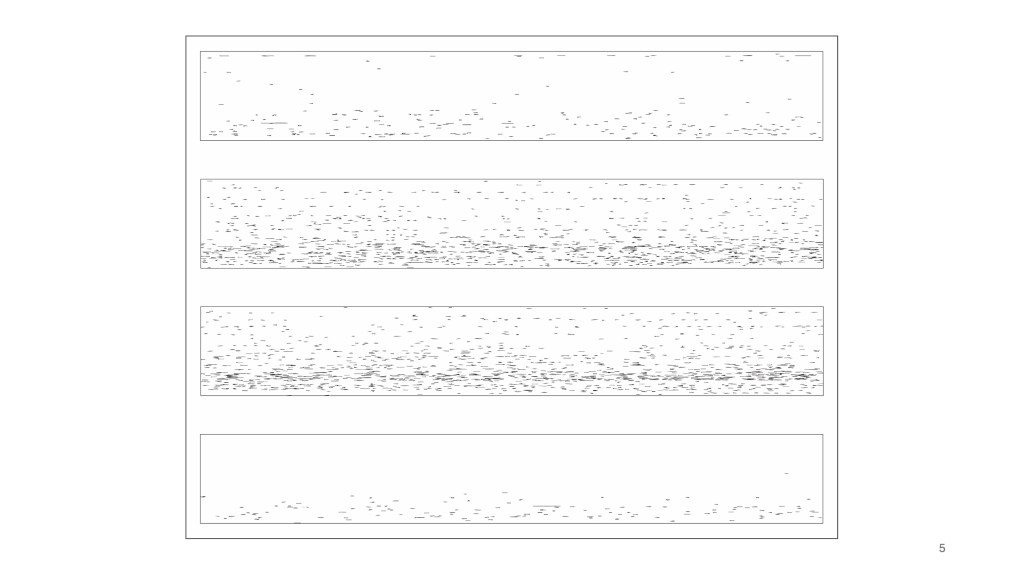
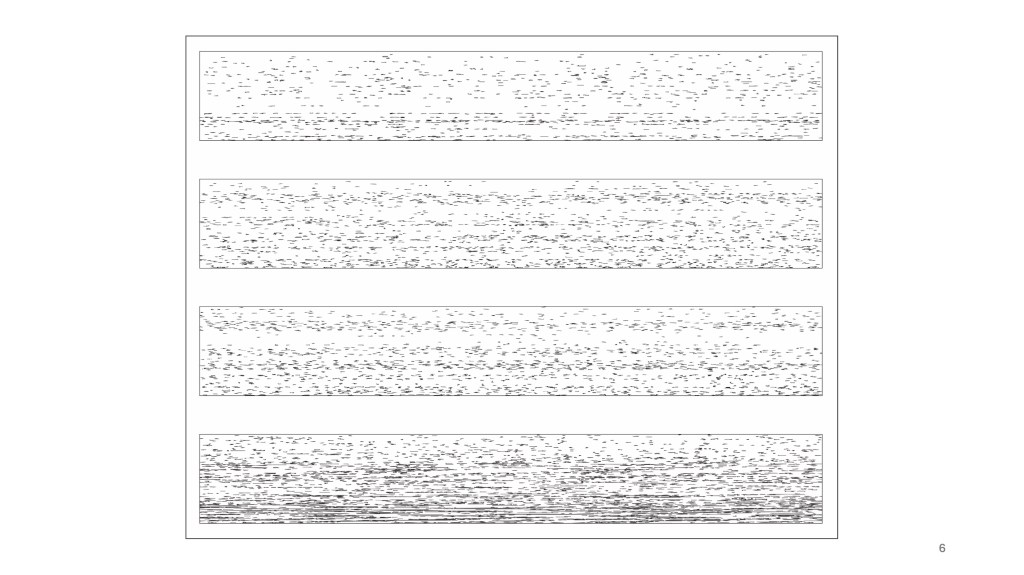
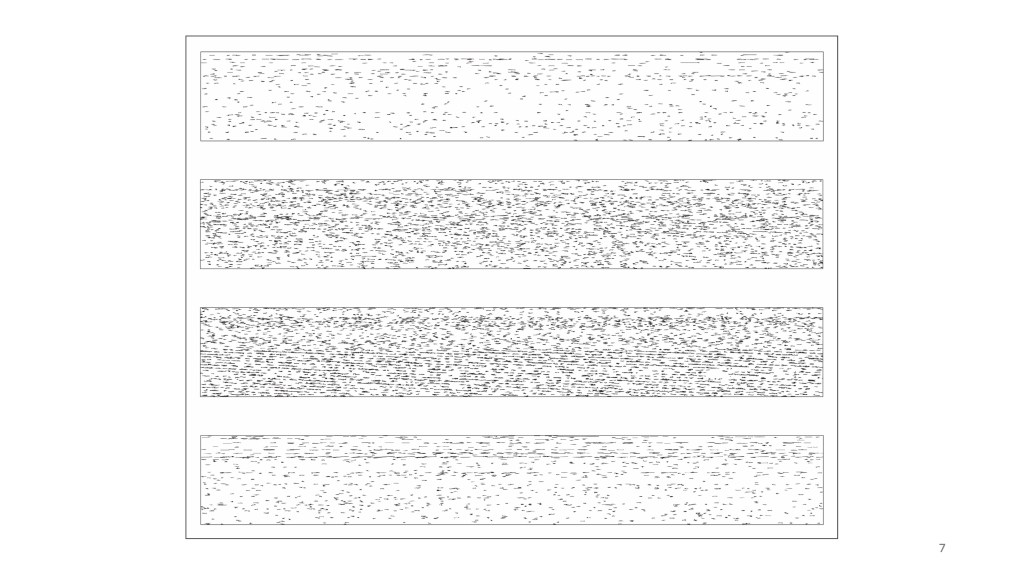
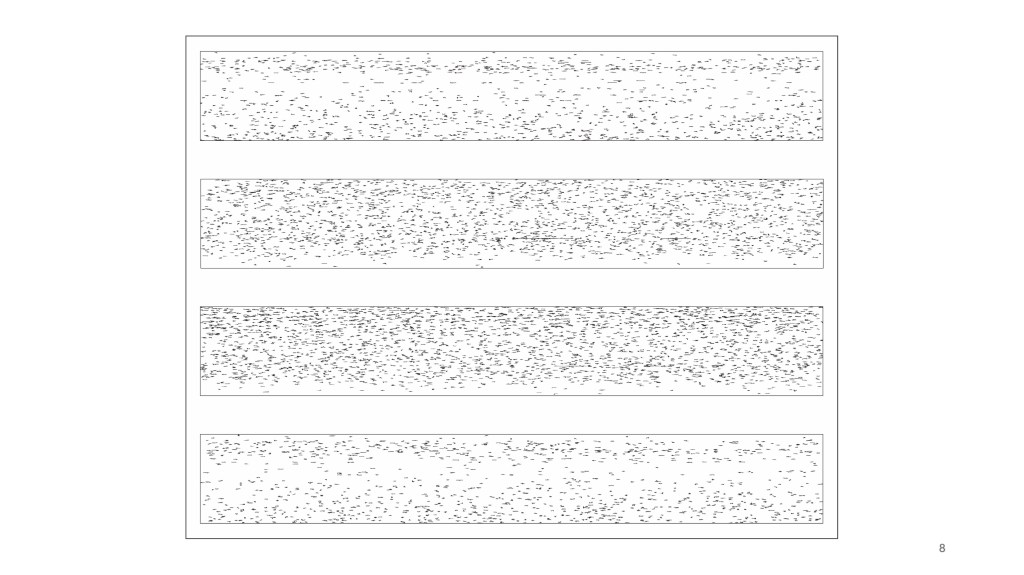
Begin with all sounds on the most remote speakers – upper, outer, etc and slowly increase density until all speakers are on and at full power. For the front channels, all speakers should be at maximum value by 5:40. For rear channels, 6:15. The sounds should be loud and anxious, and the audience should feel uncomfortable. You should end the piece by transitioning sounds back to the outer ring as they begin to fade out. For the front channels, this will be at 8:00. For rear channels 8:40.
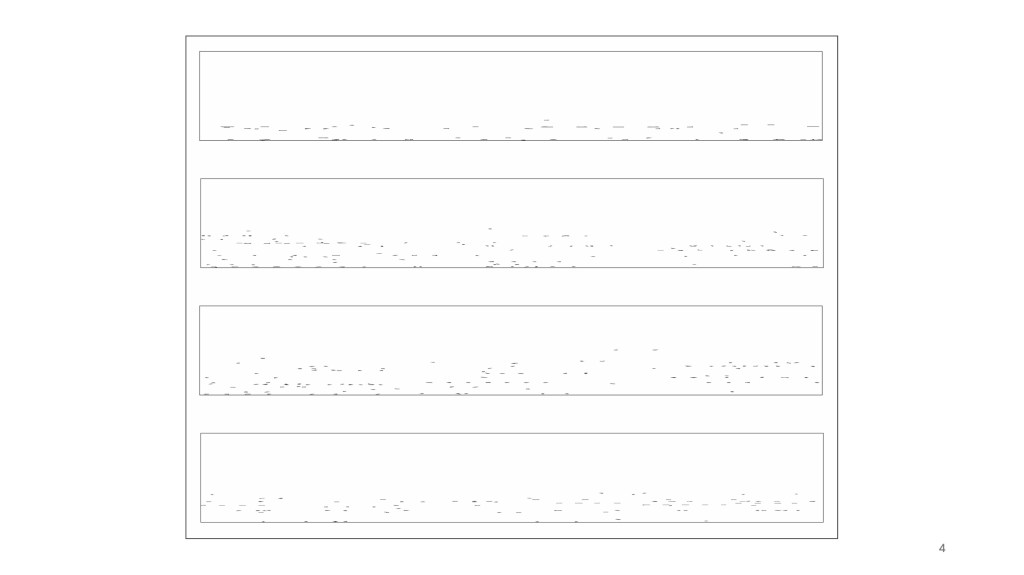
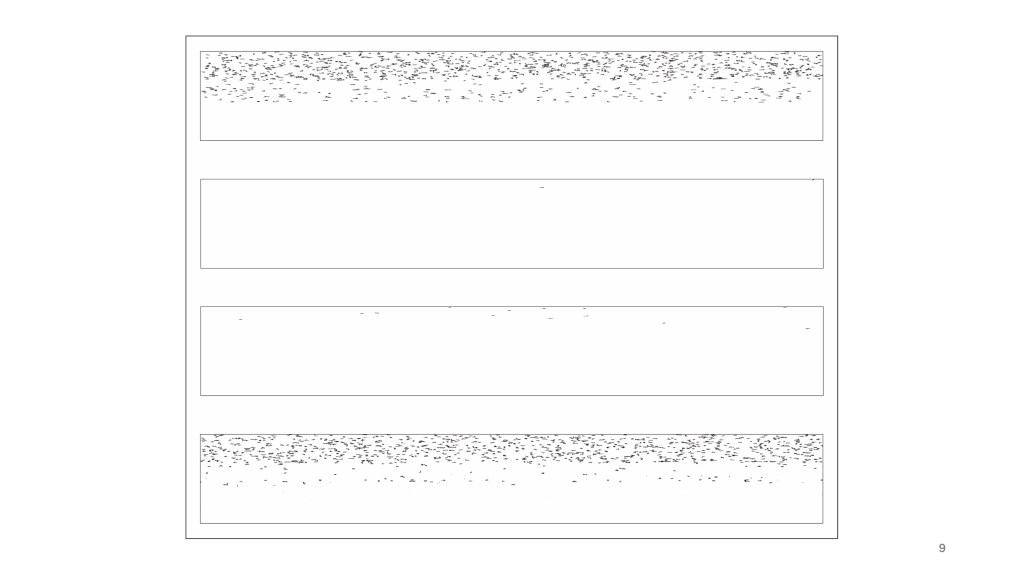
A graphic score is included to help map sonic density per quadrant. From top to bottom, the channels are: Left Rear, Left Central, Right Central, Right Rear. Each page represents approximately One minute Forty seconds of audio.
Diffusion Score
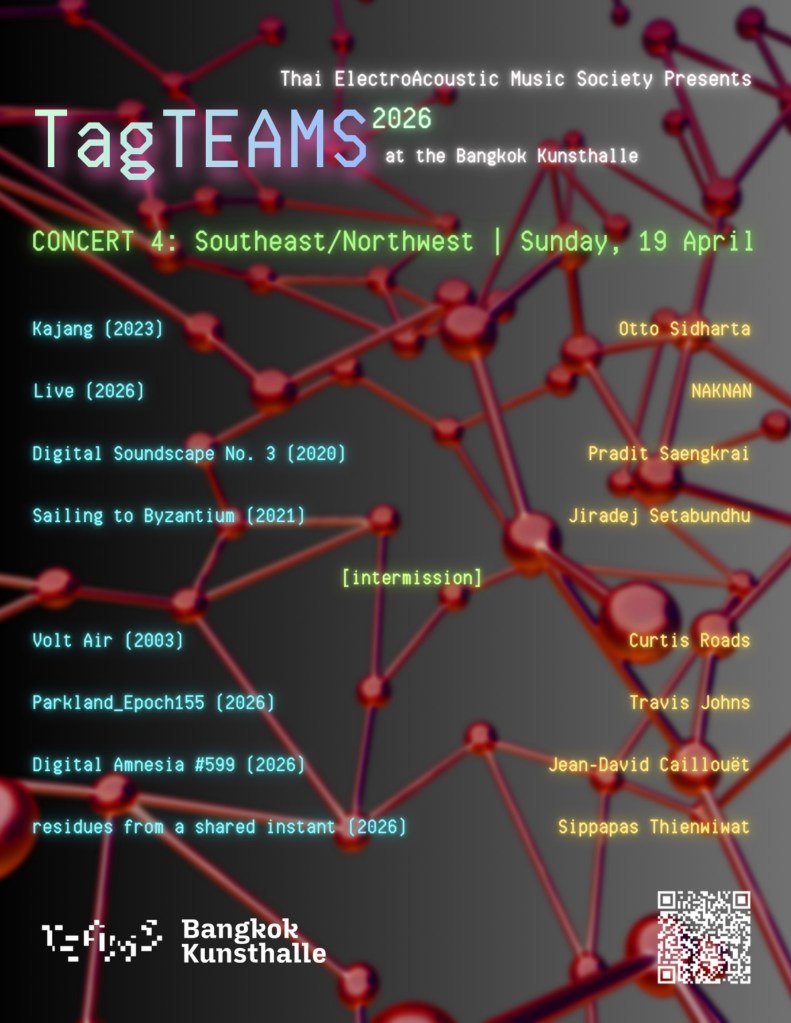
Program/Flyer
 Hypermetacontextual