The Pejibayito sits somewhere between a dirty boost and a nicely-saturated overdrive, providing tone coloration without completely turning your sound to mud – not to say that it doesn’t get dirty.
A single volume knob controls it all – the rest is up to your playing, pickups and volume settings from your guitar. The clipping stage consists of a combination of white and green LEDs, leading to a dynamic, almost tube-like feel to the pedal, perfect for conjuring cooked warmth out of solid states and some wholesome drive from their tube-derived cousins.
Also, this guy can get l-o-u-d – as in a boost of about 30 db. Always a good thing for searing solos, anthemic fanfares and retro explorations of that mid-90’s “whisper and then wall” sound we all seemed to like for some reason. For those more into subtlety, think of this more as your perfect companion for mangrove blues, cloud forest boogie and deep swamp moss-hops.
By the by, the word Pejibayito is the diminutive term for Pejibaye, which is a type of palm fruit common to Costa Rican cuisine, but often considered little more than livestock feed elsewhere. The flavor is subtle, yet unique – definitely an acquired taste and seldom presented as typical fare to outsiders. If you can find it, give it a taste – you’ll probably like it. I originally designed this circuit while living in Costa Rica in response to requests for pedals that would compliment the local music scene that weren’t as extreme as my production-run fuzzes – and over time, hey, the sound kind of grew on me, similar to the fruit of it’s namesake.
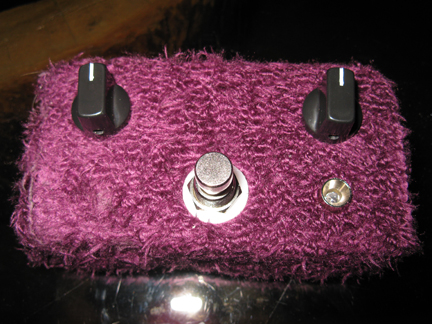
The first functioning Peji prototype that sits somewhere between a boost and a mild harmonic distortion, albeit with a coat of winter purple. This particular model currently resides with J Mascis, noted for his love of purple and little furry creatures, among other things.
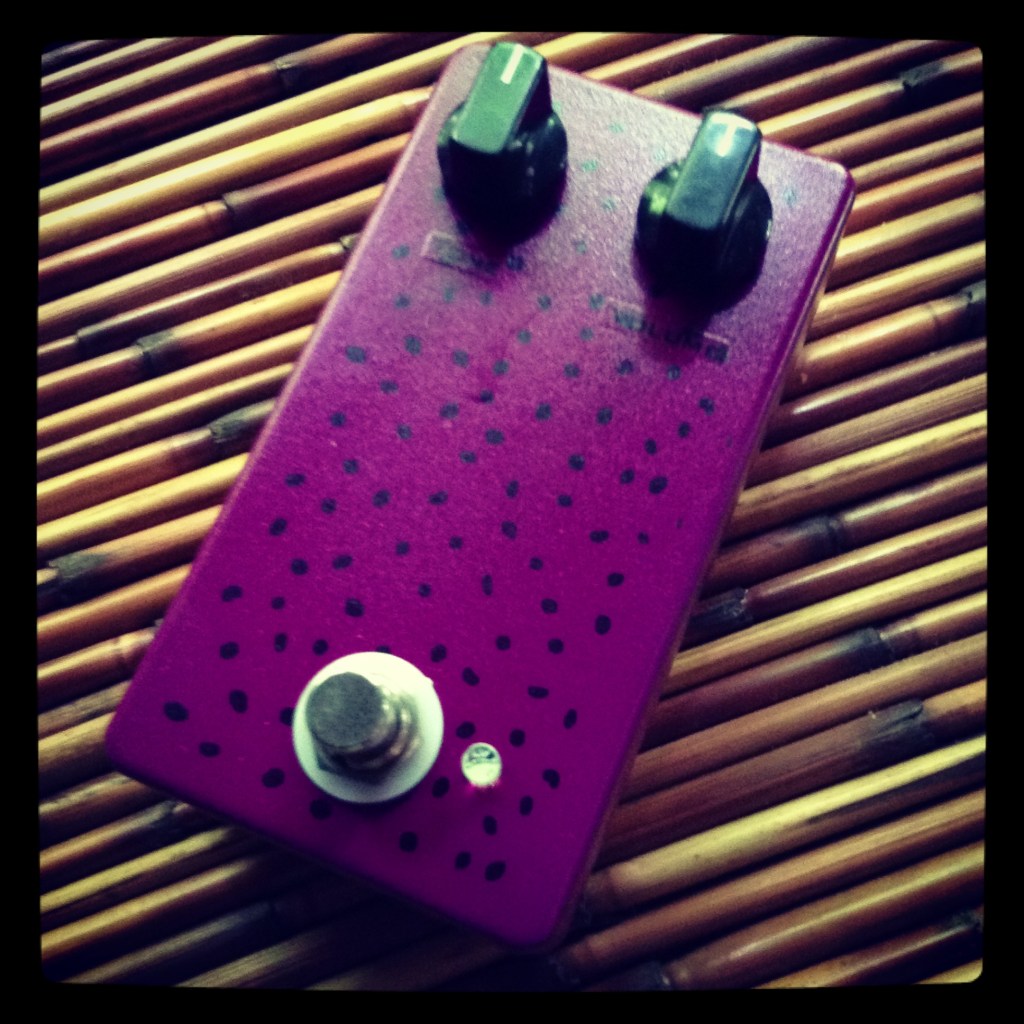
The second Pejibaye overdrive prototype. The circuit is largely similar to the first, but the harmonic/treble boost of the tone control is a little more subdued and a different diode pairing is used. The tube-like tone still revolves around a blue LED in the clipping stage, but it’s paired with a germanium and silicon diode in series on the return. The result – a bit more gain, and a little more warmth.
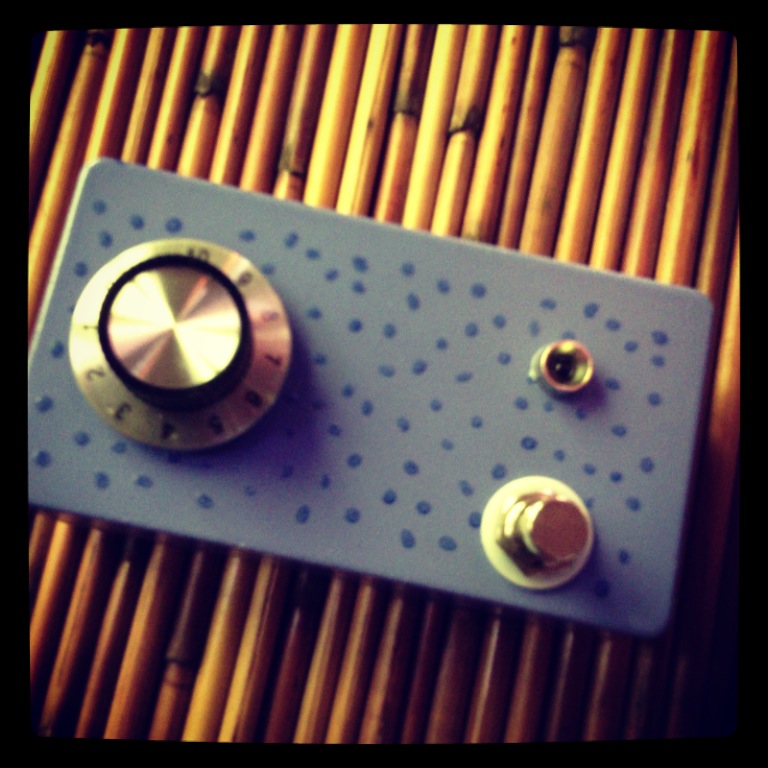
Another Pejibayito, this one documenting one of those recurring moments in time when I splurge on a bunch of novelty-color spray paints in anticipation of a bunch of projects that I for some reason I think I’m going to dive into. This usually happens in about mid-March right around the time when a tax return rolls up and I’m still certifiably insane from being cooped up all winter. I’d also just come into what seemed like a lifetime supply of embossing powder and some novelty stamps, hence the switch from collaged and painted boxes to sprayed and stamped for anyone paying attention.

A stereo version of the Pejibaye overdrive. For this one, I chose to ditch the traditional tone knob for a three-way switch that allows for three separate clipping paths – as strange as it seems, this actually makes it more versatile than the original two-knob version. This one lives in Washington State.
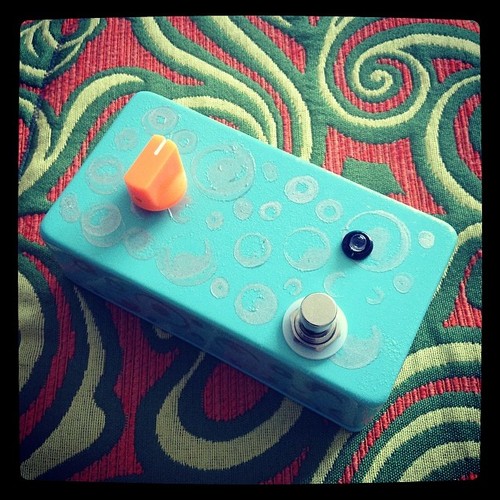
Another proto-Pejibaye boost/overdrive. From what I’ve heard, this one is employ to a country-western musician round about Baltimore.

Yet another Pejibayito for the masses. This time in cream and silver with a clipping combo of green/red LED’s to keep it interesting. This one’s presently in Gilbert, Az.

The latest addition to the Pejibaye family, this time in silver and blue with a combo of green and white LED clipping diodes.
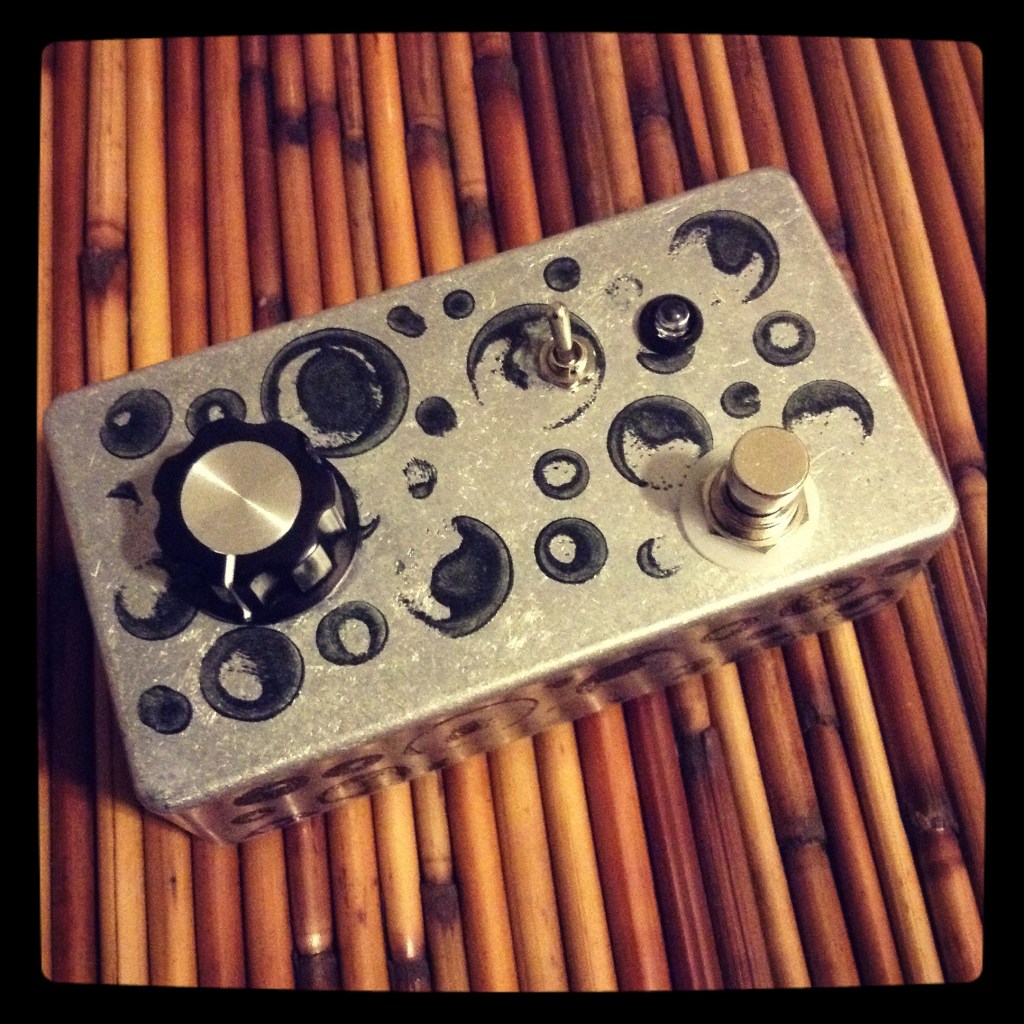
Another Peji for the masses – this one’s squire to an employee from a former day gig, wired in the service of a genre called newgrass.
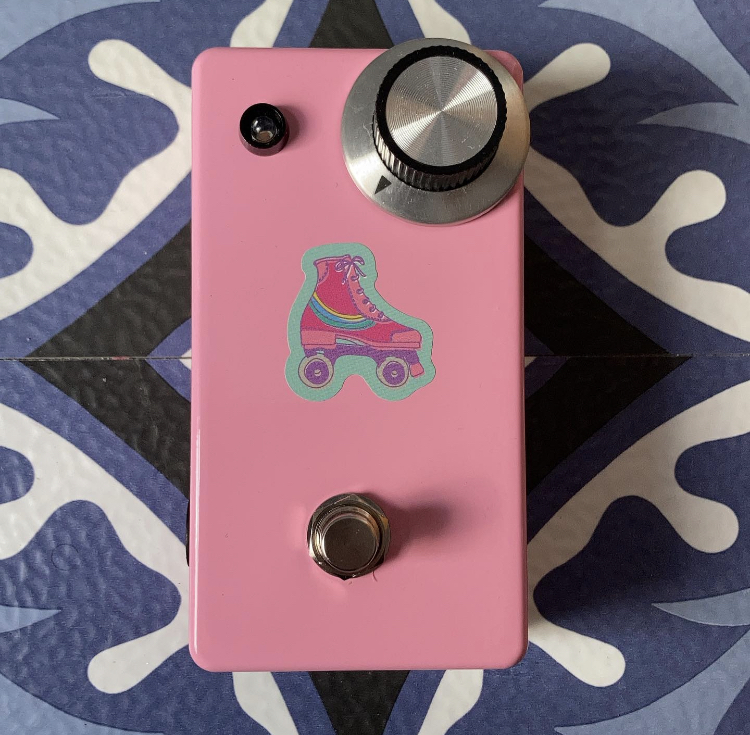
This one was a pandemic build, circa 2021 that I built for Xime.
 Hypermetacontextual