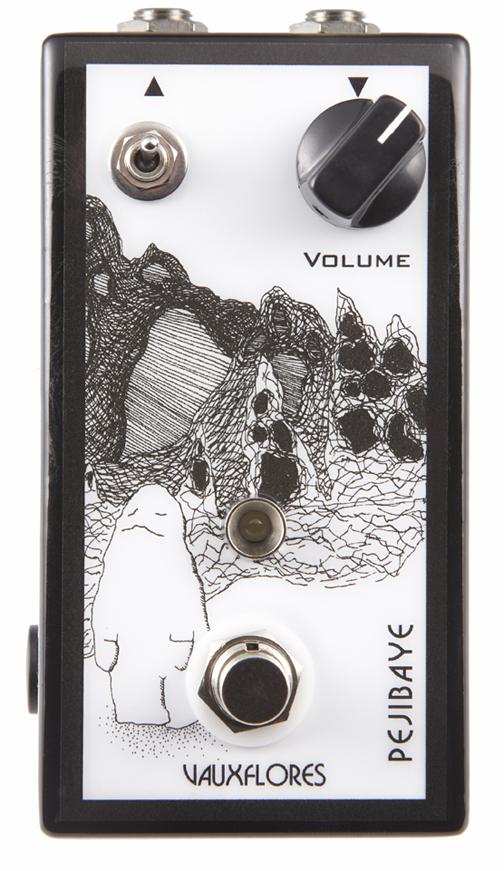
A “secret menu” overdrive of sorts. The Pejibaye is a semi-transparent, darlington overdrive that’s designed to sling mud in the most subtle of ways – letting your guitar’s tone shine through while simultaneously getting down and nasty at the drop of a dime, but still able to clean up nice for the ride home. Stylistically, it sits somewhere between a dirty boost and a nicely-saturated overdrive, providing tone coloration without completely tweaking your tone – not to say that it doesn’t get dirty.
On the right, single volume knob controls it all – the rest is up to your playing, pickups and volume settings from your guitar. On the left, a three way toggle gives you a couple clipping options, ranging from nearly nothing, to soft LED-based symmetry, to some subtle, yet hard silicon-rectifier based grit. At some points, there’s almost a tube-like feel to the pedal, perfect for conjuring cooked warmth out of solid states and some wholesome drive from their tube-derived cousins.
Also, this guy can get l-o-u-d – as in a boost of about 30 db. Always a good thing for searing solos, anthemic fanfares and retro explorations of that mid-90’s “whisper and then wall” sound we all seemed to like for some reason. For those more into subtlety, think of this more as your perfect companion for mangrove blues, cloud forest boogie and deep swamp moss-hops.
By the by, a Pejibaye is a type of palm fruit common to Costa Rican cuisine, but often considered little more than livestock feed elsewhere. The flavor is subtle, yet unique – definitely an acquired taste and seldom presented as typical fare to outsiders. If you can find it, give it a taste – you’ll probably like it. I originally designed this circuit while living in Costa Rica in response to requests for pedals that would compliment the local music scene that weren’t as extreme as my production-run fuzzes – and over time, hey, the sound kind of grew on me, similar to the fruit of it’s namesake.
History
A quick rundown on how this came about. For a good second, most of my prototyping was done exclusively on protoboard – which was a generally acceptable approach at the time, but provided a fair amount of limitations on component count and design complexity. This was also around the same time that there was a bit of critical mass on boutique pedal building where there was probably far too many offerings of dirt boxes in basically one of a set number of flavors – one transistor, two transistors, three transistors, One op-amp and two op amps, with a couple gems and hybrids in between just to shake things up for good measure. As I’d already done a four transistor (23), three transistor (24) and a two transistor (Platano Verde), this was my one transistor offering to the world.
All said, it came about as a bit of a mistake. I’d just returned from a Coachella burn with EMA and was back in Costa Rica with a head full of ideas and limited funds since I did just spend the past couple weeks in the states on tour and was still going hard into the reckless artist thing. To make ends meet, I was slinging one-off builds on the Costa Rican equivalent of Craigslist and usually how it would go is that I’d post a build and I’d be contacted by someone looking for something custom – and, being generally broke was inclined to oblige their request. This time it was for something akin to a EVH 5150 “Brown” sound – which under normal circumstances I’d refuse since there’s really very little challenge in trying to replicate a sound that the dude’s literally turned into a brand, but again, money, so I said yes. However, as I was looking to spruce things up a bit, I took some liberties that ended up being a two-channel box with a preamp run into the equivalent of some cheesy DOD-inspired high-gain thing with scooped mids. What can I say, outside of the fact that EVH is an incredible player who nearly always looked like he was having the time of his life (as opposed to my usual improv colleagues who tend to treat their instruments with a small degree of hatred or something) doesn’t really have much going on technically. As one friend put it, the late 70’s were only 20 years after the birth of rock and roll – from a technical standpoint, that’s not a long time. So I built it and while the high-gain thing was lackluster, the preamp was amazing, a fact that was duly noted by the family and periphery at the time.
WHen the time came to make the exchange, the dude completely bailed, which was not that uncommon. However, now being out the price of the pedal and hardware, I was in need of recouping losses – and seeing as this preamp was pretty minimal, decided to pull together some custom boxes to up the income in a series that eventually became known as the Pejibayito. More on that can be found here: https://hypermetacontextual.com/technology/devices/custom-electronics-2012-2020/2013-2/pejibayito/
The actual production run came a bit later, namely after the Guitar Player article. I was being asked to participate in regional trade shows and had a bit of traction to the VF name so figured it was probably time to release something new. This was in 2015 and Xime was still a tiny ball of naps so there was time to build and Pau and I had a process down for epoxy and construction so we bagan jamming these things out. I don’t think we ever really settled on a standard clipping arrangement but the most common recipe was a germanium diode paired with a blue LED on one side (though colors varied from time to time) and assymetric 1n914’s on the other (later changed to use the same diodes as the 23 for the sake of efficiency). At one point I changed the PCB design for efficiency after we moved to Ithaca and accidentally swapped the order of a capacitor and resistor – this pedal was having radio issues similar to the Platano so I was shunting the input signal to ground via a cap on the footswitch. I tried bringing that mod onto the board itself and accidentally made a low pass filter, turning a transparent OD into a compressed lo-fi rocker. When I ported the design to Eagle, I went back to the original design and it’s transparent again. A visual archive of all of the above is as follows:
Gallery

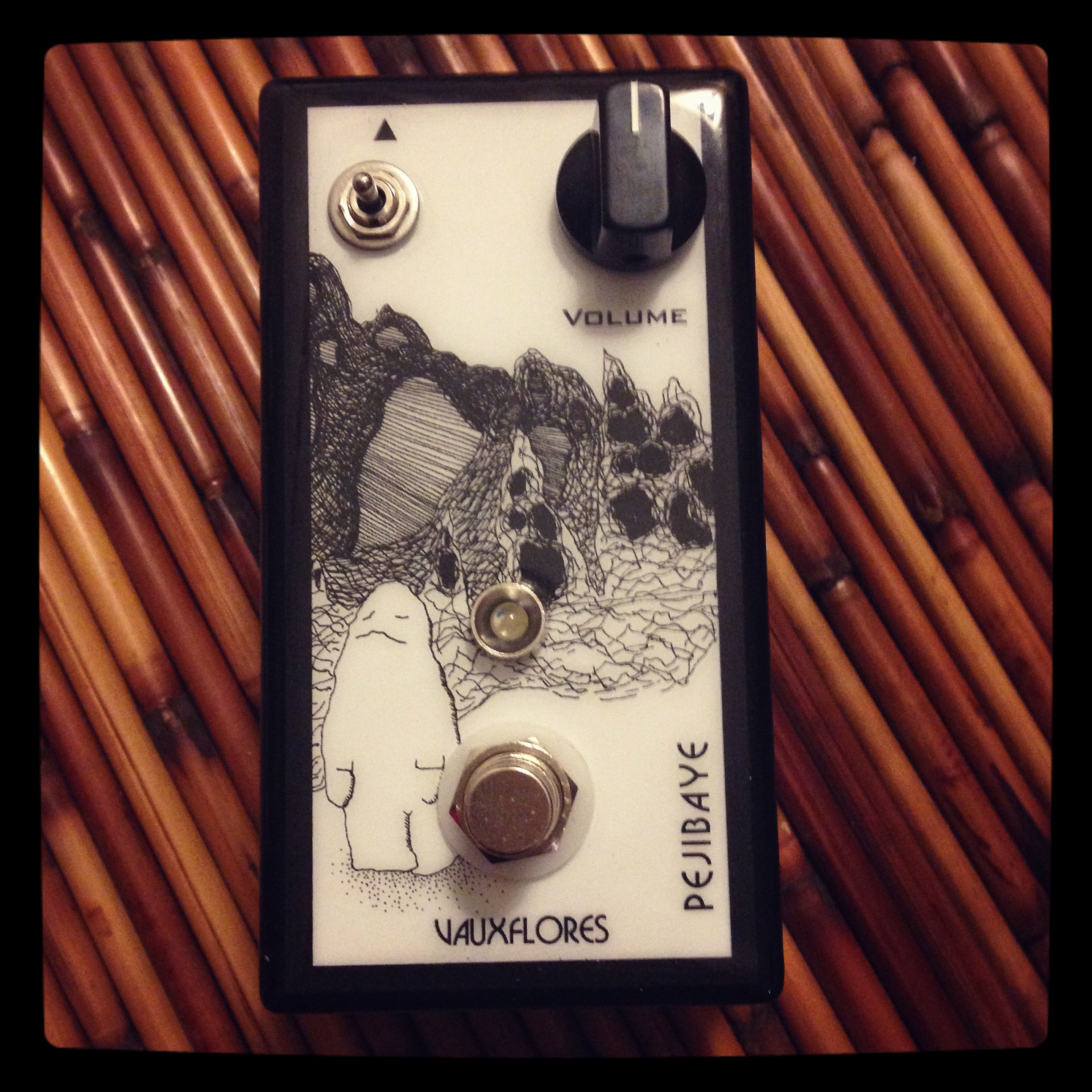

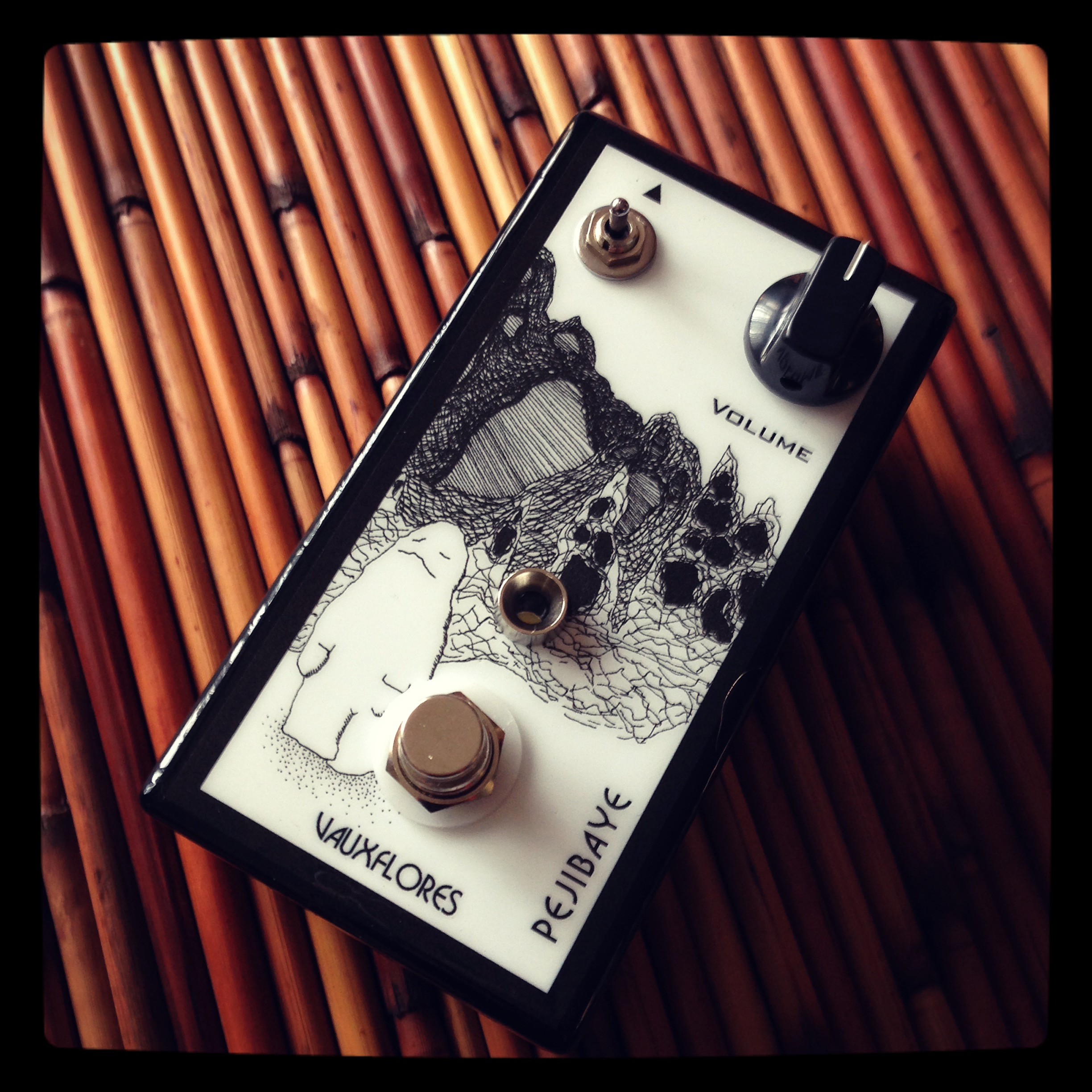

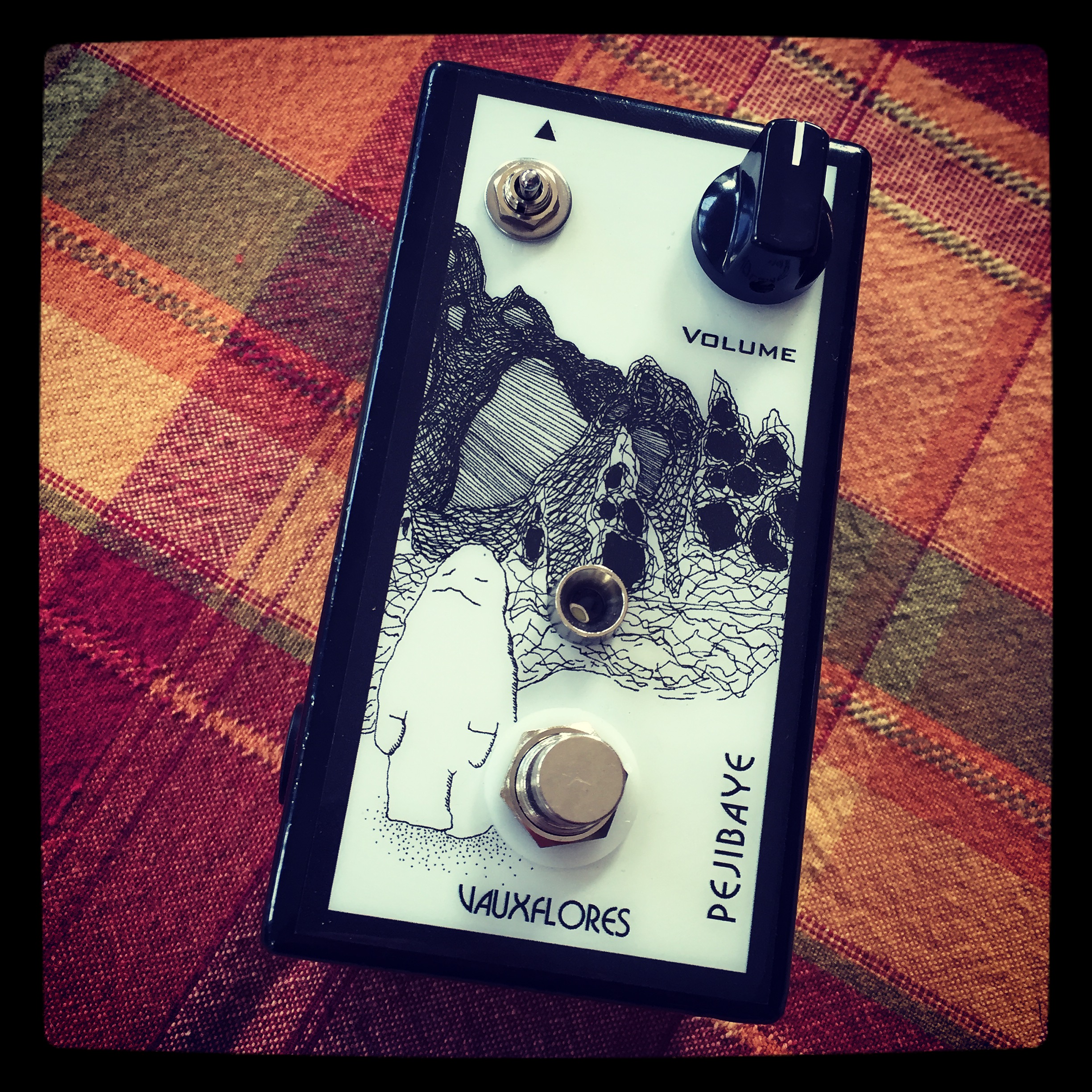
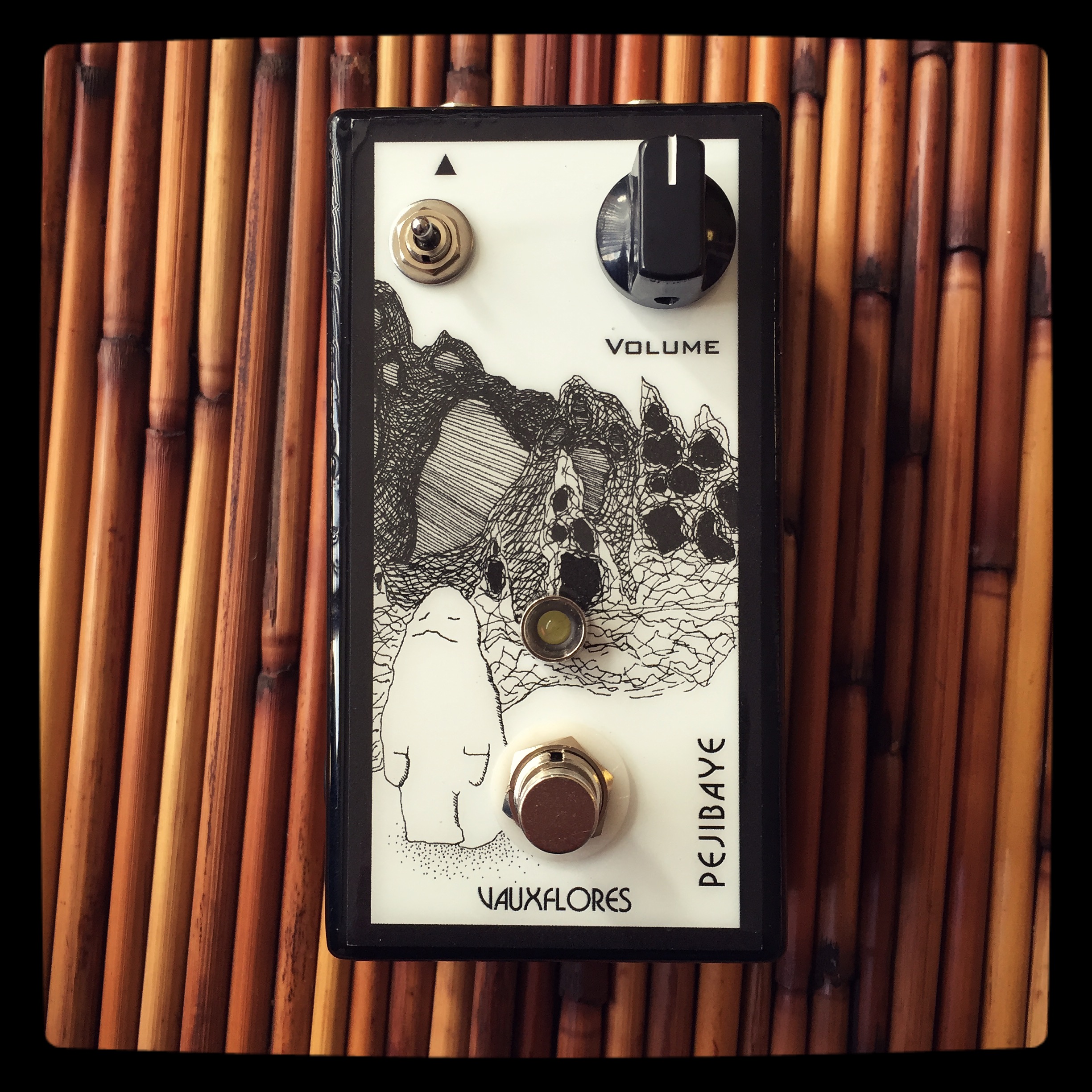
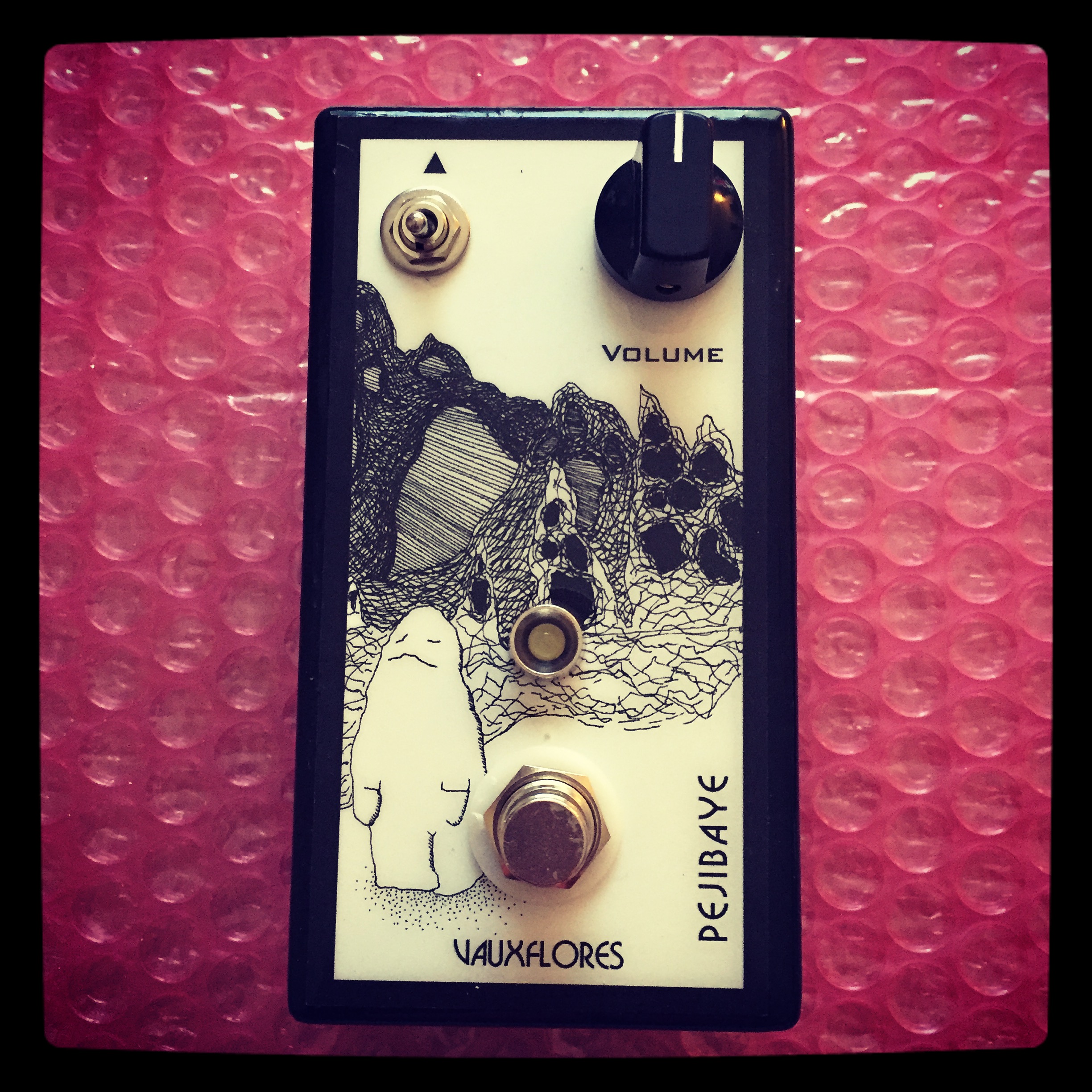
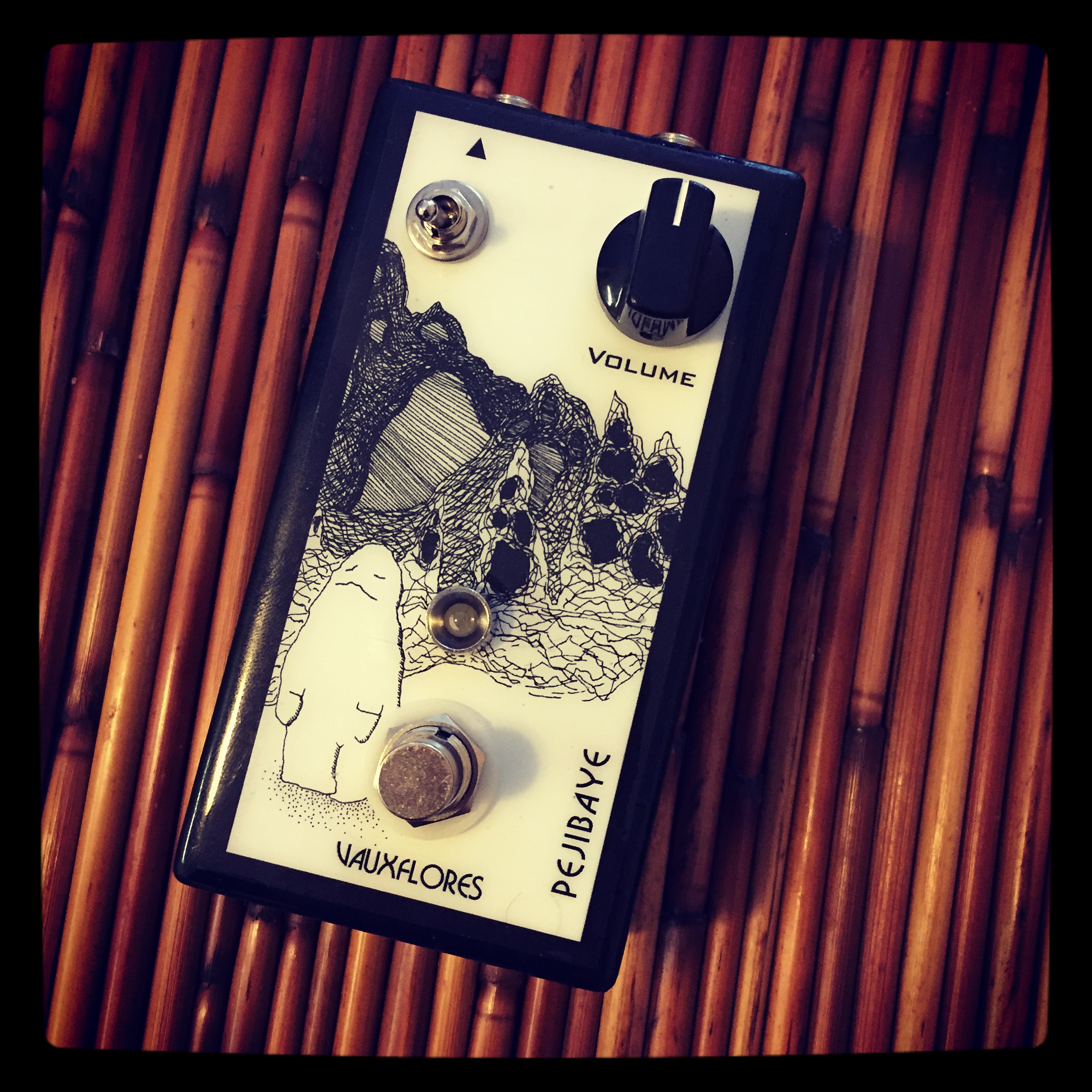


A custom Peji ordered to be the “ultimate blues pedal.” I’m not really a blues person, but among the upgrades are a switchable clipping section and input gain. Back in Baltimore, this box became kind of known in the alt-country scene as an “always on” pedal so I’m not surprised that it made the transition to blues but hey, if it works for you, I’m all for it.
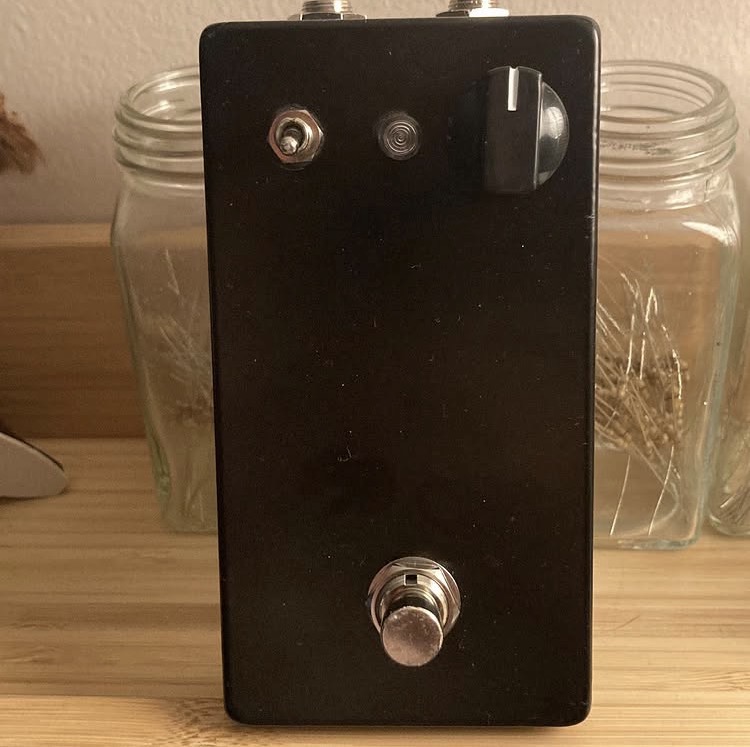
A naked third-gen Peji, circa 2022-2024. This one went to Costa Rica.
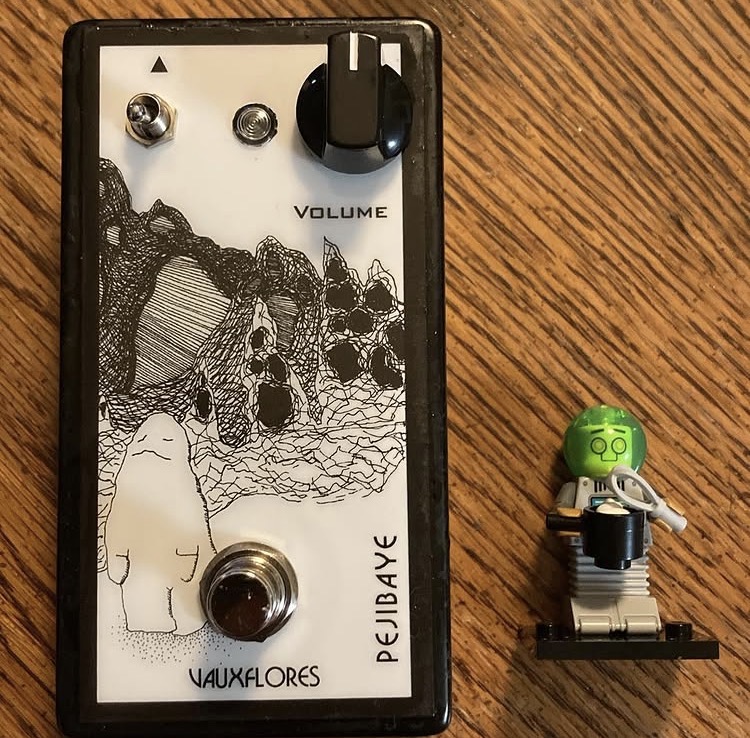
A standard Peji from the third revision. Among the upgrades are a board-mounted switch and LED as well as top-mounted jacks and power. Keith Obadike has this specific one. Also, hey look, a Lego!
Media
Here’s a video from Pedal of the Day:
And the review that accompanied it:
 Hypermetacontextual